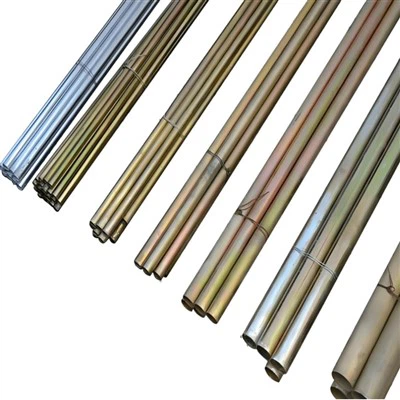
Hey there! As a supplier of Embedded Metal Conduit, I've seen firsthand how crucial it is to choose the right size for your project. It's not just about fitting the wires; it's about ensuring safety, efficiency, and long - term performance. In this blog, I'll share some tips on how to make that all - important decision.
Understanding Your Needs
First things first, you need to figure out what you're using the conduit for. Are you installing electrical wiring in a residential building, a commercial space, or an industrial facility? Each environment has its own set of requirements.
For instance, in a residential setting, you might be dealing with relatively low - voltage circuits for lighting, outlets, and small appliances. On the other hand, commercial and industrial applications often involve higher - voltage systems, more complex wiring, and larger numbers of conductors. This means you'll likely need a larger - sized conduit to accommodate everything safely.
Another factor to consider is the type of wires you'll be running through the conduit. Different wires have different diameters, and you need to make sure there's enough space inside the conduit for them. You don't want to cram too many wires in there, as this can lead to overheating and potential fire hazards.
Calculating the Fill Capacity
One of the key aspects of choosing the right size of embedded metal conduit is calculating the fill capacity. The National Electrical Code (NEC) sets guidelines on how much of the conduit's cross - sectional area can be filled with wires.
To calculate the fill capacity, you need to know the total cross - sectional area of all the wires you'll be running through the conduit. You can find this information in the wire manufacturer's specifications. Once you have the total wire area, you can compare it to the available area inside the conduit.
Most of the time, you shouldn't fill more than 40% of the conduit's cross - sectional area with wires. This leaves enough room for air circulation, which helps prevent overheating. For example, if you have a conduit with an inside diameter of 1 inch, its cross - sectional area is approximately 0.785 square inches. If you follow the 40% rule, you should only fill it with wires that have a combined cross - sectional area of about 0.314 square inches.
Considering Bends and Fittings
When you're installing the conduit, you'll likely need to make bends and use fittings. These can affect the available space inside the conduit and make it more difficult for the wires to pass through.
Each bend in the conduit adds resistance to the wire pulling process. If you have too many bends or if the bends are too sharp, it can be almost impossible to pull the wires through. That's why it's important to choose a conduit size that takes these factors into account.
In general, you should try to limit the number of bends in the conduit run. If you need to make bends, use gentle curves rather than sharp angles. And when you're using fittings, make sure they're the right size and type for your conduit.


Future Expansion
It's always a good idea to think about future expansion when choosing the size of your embedded metal conduit. You might not need to run a lot of wires now, but what about in a few years? If you anticipate adding more circuits or upgrading your electrical system, it's better to choose a larger conduit size from the start.
This way, you won't have to go through the hassle of replacing the conduit later on. It's a bit like buying a bigger house than you currently need; it gives you room to grow.
Types of Embedded Metal Conduit
There are different types of embedded metal conduit available, and each has its own characteristics. For example, Galvanized Rigid Metal Conduit is known for its durability and strength. It's often used in industrial and commercial applications where the conduit needs to withstand harsh conditions.
On the other hand, Plenum - Rated Conduit is designed for use in air - handling spaces. It has special fire - resistant properties to prevent the spread of fire and smoke through the plenum area.
Our Embedded Metal Conduit comes in a variety of sizes and types to meet your specific needs. Whether you're working on a small residential project or a large - scale commercial installation, we've got you covered.
Making the Final Decision
After considering all these factors, it's time to make the final decision on the size of your embedded metal conduit. You might want to consult with an electrician or an electrical engineer, especially if you're working on a complex project.
They can help you double - check your calculations and make sure you're choosing the right size based on all the requirements. And remember, it's better to err on the side of caution and choose a slightly larger conduit if you're not sure.
Contact Us for Your Conduit Needs
If you're still not sure which size of embedded metal conduit is right for your project, or if you have any other questions, don't hesitate to reach out. As a supplier, we have a team of experts who can provide you with personalized advice and guidance.
We offer high - quality embedded metal conduit at competitive prices. Whether you need a small quantity for a DIY project or a large order for a commercial job, we can meet your needs. Contact us today to start the conversation about your conduit requirements.
References
- National Electrical Code (NEC)
- Wire manufacturer's specifications