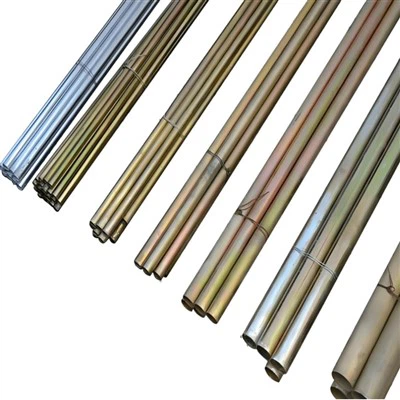
Hey there! As a supplier of Galvanized Rigid Metal Conduit, I often get asked about the installation clearances required for this product. So, I thought I'd write a blog post to share some insights and clear up any confusion.
First off, let's talk about what Galvanized Rigid Metal Conduit is. It's a type of electrical conduit that's made from steel and coated with a layer of zinc to protect it from corrosion. It's commonly used in commercial and industrial settings to protect electrical wiring from damage and to prevent electrical fires.
Now, onto the installation clearances. The installation clearances for Galvanized Rigid Metal Conduit depend on a few factors, including the type of building, the location of the conduit, and the type of wiring that will be installed inside the conduit.
General Clearance Requirements
In general, the National Electrical Code (NEC) requires a minimum clearance of 1.5 inches between the conduit and any combustible material. This is to prevent the heat generated by the electrical wiring inside the conduit from igniting the combustible material.
However, there are some exceptions to this rule. For example, if the conduit is installed in a non-combustible wall or ceiling, the clearance requirement may be reduced to 1 inch. Additionally, if the conduit is installed in a raceway or cable tray, the clearance requirement may be waived altogether.
Clearance Requirements for Different Types of Buildings
The clearance requirements for Galvanized Rigid Metal Conduit also vary depending on the type of building. For example, in a residential building, the minimum clearance requirement is typically 1.5 inches. However, in a commercial or industrial building, the clearance requirement may be higher, depending on the specific occupancy and fire safety requirements.
In a high-rise building, for example, the NEC may require a minimum clearance of 3 inches between the conduit and any combustible material. This is to ensure that the electrical wiring is protected in the event of a fire and to prevent the spread of fire through the conduit.
Clearance Requirements for Different Locations
The clearance requirements for Galvanized Rigid Metal Conduit also depend on the location of the conduit. For example, if the conduit is installed in a ceiling, the clearance requirement may be different than if it's installed in a wall.
In a ceiling, the NEC typically requires a minimum clearance of 1.5 inches between the conduit and any combustible material. However, if the conduit is installed in a suspended ceiling, the clearance requirement may be reduced to 1 inch.
In a wall, the clearance requirement may also vary depending on the type of wall. For example, if the wall is made of non-combustible material, the clearance requirement may be reduced to 1 inch. However, if the wall is made of combustible material, the clearance requirement may be higher.
Clearance Requirements for Different Types of Wiring
The clearance requirements for Galvanized Rigid Metal Conduit also depend on the type of wiring that will be installed inside the conduit. For example, if the wiring is a high-voltage wiring, the clearance requirement may be higher than if it's a low-voltage wiring.
In general, the NEC requires a minimum clearance of 1.5 inches between the conduit and any high-voltage wiring. However, if the high-voltage wiring is installed in a separate raceway or cable tray, the clearance requirement may be waived altogether.
Other Considerations
In addition to the clearance requirements, there are some other considerations that you need to keep in mind when installing Galvanized Rigid Metal Conduit. For example, you need to make sure that the conduit is properly supported and secured to prevent it from moving or vibrating.
You also need to make sure that the conduit is properly grounded to prevent electrical shock and to protect the wiring from damage. Additionally, you need to make sure that the conduit is installed in accordance with the manufacturer's instructions and the NEC.
Bonding and Grounding
Another important aspect of installing Galvanized Rigid Metal Conduit is bonding and grounding. Bonding is the process of connecting all metal parts of the electrical system together to create a continuous electrical path. Grounding is the process of connecting the electrical system to the earth to prevent electrical shock and to protect the wiring from damage.
When installing Galvanized Rigid Metal Conduit, you need to make sure that the conduit is properly bonded and grounded. This can be done by using bonding jumpers and grounding conductors. For more information on bonding flexible metal conduit, check out this Bonding Flexible Metal Conduit page.
Surface Mounted Metal Conduit
Surface mounted metal conduit is another type of electrical conduit that's commonly used in commercial and industrial settings. It's similar to Galvanized Rigid Metal Conduit, but it's installed on the surface of a wall or ceiling rather than inside a wall or ceiling.


When installing surface mounted metal conduit, you need to make sure that the conduit is properly supported and secured to prevent it from moving or vibrating. You also need to make sure that the conduit is properly grounded to prevent electrical shock and to protect the wiring from damage. For more information on surface mounted metal conduit, check out this Surface Mounted Metal Conduit page.
Socket Type Tight-fitting Galvanized Steel Conduit
Socket type tight-fitting galvanized steel conduit is a type of electrical conduit that's designed to provide a tight fit between the conduit and the fittings. This helps to prevent moisture and debris from entering the conduit and damaging the wiring.
When installing socket type tight-fitting galvanized steel conduit, you need to make sure that the conduit is properly cut and threaded to ensure a tight fit between the conduit and the fittings. You also need to make sure that the conduit is properly grounded to prevent electrical shock and to protect the wiring from damage. For more information on socket type tight-fitting galvanized steel conduit, check out this Socket Type Tight-fitting Galvanized Steel Conduit page.
Conclusion
In conclusion, the installation clearances required for Galvanized Rigid Metal Conduit depend on a few factors, including the type of building, the location of the conduit, and the type of wiring that will be installed inside the conduit. It's important to make sure that you follow the NEC and the manufacturer's instructions when installing Galvanized Rigid Metal Conduit to ensure that it's installed safely and correctly.
If you have any questions or need more information about Galvanized Rigid Metal Conduit or any of our other products, please don't hesitate to contact us. We'd be happy to help you with your electrical conduit needs and discuss potential procurement opportunities.
References
- National Electrical Code (NEC)
- Manufacturer's instructions for Galvanized Rigid Metal Conduit