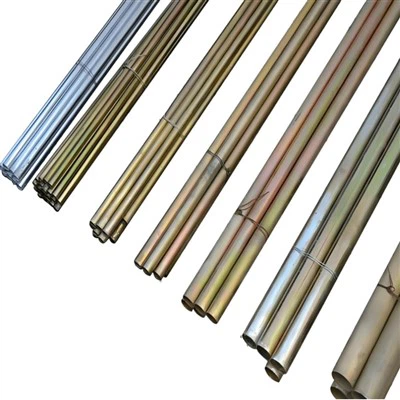
In the dynamic world of electrical installations, ensuring the safety and efficiency of wiring systems is of utmost importance. Plenum - Rated Conduit plays a crucial role in this regard, especially in commercial and high - rise building settings. As a leading Plenum - Rated Conduit supplier, we understand the significance of testing the performance of these conduits to meet the highest industry standards. This blog post will delve into the various methods to test the performance of Plenum - Rated Conduit.
Understanding Plenum - Rated Conduit
Before we dive into the testing methods, it's essential to understand what Plenum - Rated Conduit is. Plenum spaces are areas in buildings used for air circulation, such as the space above dropped ceilings or below raised floors. Plenum - Rated Conduit is designed to be installed in these plenum spaces. It must meet strict fire and smoke safety standards because in the event of a fire, the plenum acts as a pathway for the spread of fire and smoke throughout the building. These conduits are made from materials that have low flame spread and smoke generation characteristics.
Fire Resistance Testing
One of the most critical performance aspects of Plenum - Rated Conduit is its fire resistance. The Underwriters Laboratories (UL) has established a standard, UL 2024, for testing the fire performance of plenum cables and conduits.
Flame Spread Test
The flame spread test is a fundamental part of fire resistance testing. A sample of the Plenum - Rated Conduit is exposed to a controlled flame for a specific period. The rate at which the flame spreads along the surface of the conduit is measured. For a conduit to be considered plenum - rated, it must have a low flame spread rating. A lower flame spread rating indicates that the conduit will not contribute significantly to the spread of fire in the plenum space.
Smoke Generation Test
In addition to flame spread, the amount of smoke generated by the conduit during a fire is also crucial. The smoke generation test measures the optical density of the smoke produced when the conduit is exposed to fire. Plenum - Rated Conduit should have a low smoke generation rating to minimize the risk of smoke inhalation and visibility issues during a fire emergency.
Mechanical Performance Testing
Plenum - Rated Conduit also needs to withstand mechanical stresses during installation and throughout its service life.
Tensile Strength Test
The tensile strength test measures the maximum amount of tensile (pulling) force that the conduit can withstand before breaking. A sample of the conduit is placed in a testing machine, and a gradually increasing pulling force is applied until the conduit fails. This test ensures that the conduit can handle the stresses associated with pulling cables through it during installation.
Impact Resistance Test
The impact resistance test evaluates the conduit's ability to withstand sudden impacts. A weighted pendulum or a falling weight is used to strike the conduit at a specific velocity. The conduit should not crack, break, or suffer significant damage under these impact conditions. This is important because during construction or maintenance activities, the conduit may be accidentally hit or bumped.
Bending Test
The bending test assesses the conduit's flexibility and its ability to maintain its integrity when bent. A section of the conduit is bent to a specific radius, and then inspected for any signs of cracking or deformation. This test is crucial as conduits often need to be bent to fit around obstacles or follow the layout of the building's plenum space.
Chemical Resistance Testing
Plenum - Rated Conduit may be exposed to various chemicals in the plenum environment, such as cleaning agents, moisture, and airborne pollutants. Chemical resistance testing is necessary to ensure that the conduit can withstand these chemical exposures without deteriorating.
Immersion Test
In an immersion test, a sample of the conduit is immersed in a specific chemical solution for a set period. After the immersion, the conduit is inspected for any changes in its appearance, such as discoloration, swelling, or softening. It is also tested for any reduction in its mechanical properties, such as tensile strength or impact resistance.


Exposure to Environmental Conditions
The conduit is also exposed to different environmental conditions, such as high humidity and temperature variations. These conditions can accelerate the chemical reactions between the conduit and the surrounding chemicals. By simulating these real - world environmental conditions, we can accurately assess the long - term chemical resistance of the Plenum - Rated Conduit.
Electrical Performance Testing
Although Plenum - Rated Conduit is mainly used for housing electrical cables rather than conducting electricity itself, it still needs to have certain electrical performance characteristics.
Insulation Resistance Test
The insulation resistance test measures the resistance of the conduit's material to the flow of electric current. A high insulation resistance is desirable to prevent electrical leakage and short - circuits. A test voltage is applied to the conduit, and the resulting current is measured. The insulation resistance is then calculated using Ohm's law.
Grounding Continuity Test
In electrical systems, proper grounding is essential for safety. The grounding continuity test ensures that the Plenum - Rated Conduit provides a continuous path for electrical grounding. A low - resistance connection between the conduit and the grounding system is required to effectively dissipate electrical faults and prevent electrical shocks.
Acoustic Performance Testing (Optional)
In some applications, especially in buildings where noise control is important, the acoustic performance of the Plenum - Rated Conduit may be tested.
Sound Transmission Loss Test
The sound transmission loss test measures the ability of the conduit to reduce the transmission of sound through it. A sound source is placed on one side of the conduit, and the sound level is measured on the other side. The difference in sound levels between the two sides indicates the sound transmission loss of the conduit. A higher sound transmission loss means that the conduit is more effective at reducing noise transmission.
Why Testing is Crucial for Our Customers
As a Plenum - Rated Conduit supplier, we are committed to providing our customers with products that meet the highest quality and safety standards. By conducting comprehensive performance testing on our conduits, we can ensure that they are reliable, durable, and compliant with all relevant regulations. This gives our customers peace of mind knowing that their electrical installations are safe and efficient. Whether it's a small commercial building or a large high - rise complex, our tested Plenum - Rated Conduit can provide the necessary protection for their wiring systems.
Other Related Products
In addition to our high - quality Plenum - Rated Conduit, we also offer other related products such as Explosion Proof Flexible Metal Conduit and Flexible Conduit Junction Box. These products are also rigorously tested to ensure their performance and safety.
Contact Us for Procurement
If you are in the market for Plenum - Rated Conduit or any of our other electrical conduit products, we invite you to contact us for procurement. Our team of experts is ready to assist you in selecting the right products for your specific needs. We can provide detailed product information, technical support, and competitive pricing. Don't hesitate to reach out to us to start a productive discussion about your electrical installation requirements.
References
- Underwriters Laboratories. UL 2024 Standard for Safety for Fire - Test - Response of Electrical and Optical - Fiber Cables for Use in Air - Handling Spaces.
- National Electrical Code (NEC) for regulations related to plenum spaces and conduit installations.
- ASTM International standards for various mechanical, chemical, and electrical performance tests.